Best IPTV in the United States: How to Fix ISP Throttling, Firestick Setup, and Smooth Streaming in 2026
What IPTV Means in the USA
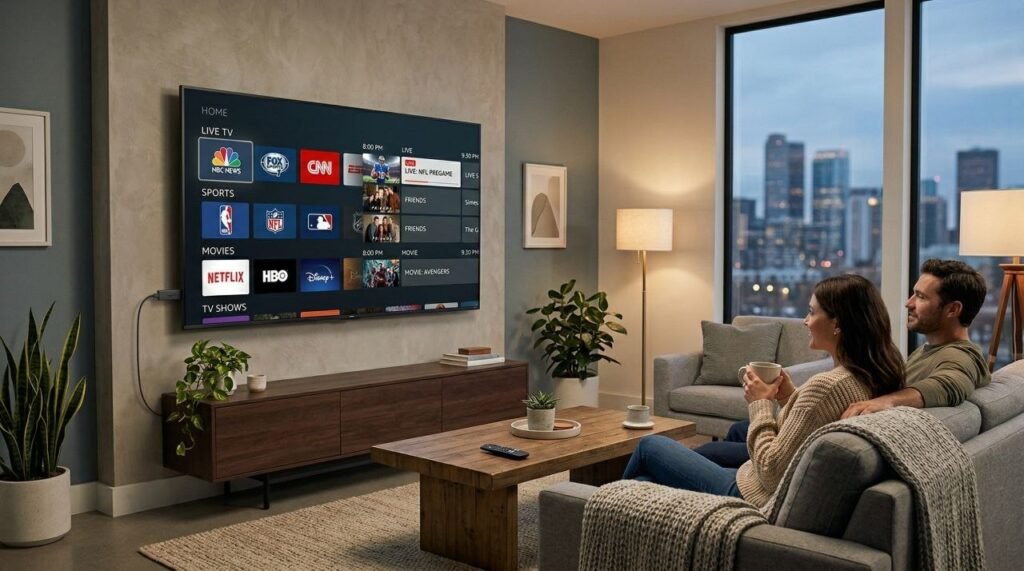
IPTV in the United States refers to watching television channels and on-demand content through an internet connection instead of traditional cable or satellite services. In practical terms, this means viewers use apps on devices like Smart TVs, Firestick, or mobile phones to stream live channels, movies, and series. Unlike standard streaming platforms such as Netflix, IPTV services often combine live TV, sports, and global channels in one interface, making them attractive for users who want more flexibility and content variety.
For many users in the USA, IPTV is less about replacing streaming apps and more about expanding what they can watch. A typical example is someone using a Firestick to access both local content and international channels in one place. This includes sports broadcasts, entertainment networks, and even region-specific content like IPTV Spain or British IPTV. The interface usually looks like a traditional TV guide, where channels are grouped into categories such as sports, movies, and news, making it easy to browse large channel libraries.
Another important aspect is how IPTV services operate across different devices and internet setups. In the US, most households already rely on high-speed broadband and Wi-Fi networks, which makes IPTV accessible without additional hardware. Users simply install an IPTV app, enter their IPTV subscription details, and start streaming. However, performance can vary depending on internet providers, device compatibility, and the quality of the IPTV service itself. This is why terms like “best IPTV” or “premium IPTV” are commonly searched—users want services that offer stable streaming and reliable channel access.
It’s also important to understand that IPTV in the USA often comes with technical considerations that are less visible with traditional TV. Issues like ISP throttling, buffering, or app compatibility can affect the experience if the setup is not optimized. For example, a user might experience smooth HD streaming on a Smart TV but face interruptions on a mobile device due to network congestion. Understanding these factors helps viewers choose better IPTV services and create a setup that supports consistent, high-quality streaming across all their devices.
Quick takeaway:
- IPTV in the USA delivers live TV and on-demand content through internet streaming
- Users can watch channels on Smart TVs, Firestick, and mobile devices
- Streaming quality depends on internet speed, device, and IPTV service reliability
Why IPTV Gets Blocked or Slowed
IPTV streams can get blocked or slowed in the United States mainly due to how internet traffic is managed by providers, combined with device limitations and service quality. Unlike traditional TV signals, IPTV relies entirely on real-time data delivery over the internet. When that data flow is interrupted, restricted, or deprioritized, viewers experience buffering, freezing, or sudden drops in quality. These issues are often mistaken for problems with the IPTV service itself, but in many cases, they are linked to network behavior and setup.
One of the most common causes is ISP throttling. Internet providers sometimes manage bandwidth by slowing down certain types of traffic, especially high-volume streaming. For example, a user watching live sports on a Firestick during peak evening hours might notice the stream buffering even though their internet speed seems sufficient. This happens because the connection is being shared across many users, and streaming traffic may not be prioritized. In setups where multiple devices are connected—such as TVs, phones, and laptops—this effect can become more noticeable.
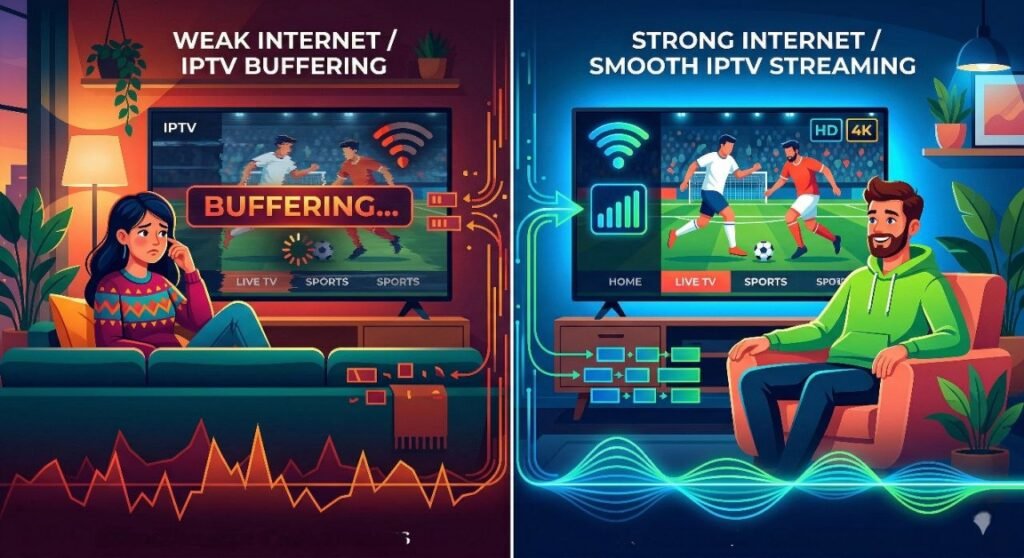
Another factor is network congestion and device performance. Even with a good internet plan, weak Wi-Fi signals, outdated routers, or overloaded devices can reduce streaming quality. A viewer using a Smart TV far from the router may experience interruptions, while the same stream might run smoothly on a device connected via Ethernet. In the scenario shown above, where streaming stability depends on signal strength and device capability, the difference between a stable and unstable connection becomes clear when switching between channels or loading live content.
The IPTV service itself also plays a role. Not all IPTV services maintain the same level of server stability or stream optimization. Some services may struggle during peak hours when many users are watching simultaneously, leading to slow channel loading or freezing streams. Choosing a well-maintained service with optimized servers and good support for multiple devices can significantly reduce these problems. Understanding whether the issue comes from your ISP, device, or service is the first step toward improving overall streaming performance.
Quick takeaway:
- IPTV can slow down due to ISP throttling or network congestion
- Device setup and Wi-Fi strength directly affect streaming quality
- Service stability and server performance play a key role in smooth playback
ISP throttling and buffering
ISP throttling and buffering are two of the main reasons IPTV streams feel unstable, even when your internet connection appears fast. Throttling happens when an internet service provider intentionally slows down certain types of traffic, including streaming data. Because IPTV relies on continuous video delivery, any reduction in speed or priority can lead to interruptions. Buffering is the visible result of this process—when the stream pauses to load more data before continuing playback.
In real-world use, this often becomes noticeable during peak hours. For example, a user watching live sports on a Firestick in the evening may experience sudden buffering, even though their connection normally supports HD streaming. This is not always due to the IPTV service itself but rather how the ISP manages bandwidth across many users at the same time. Streaming-heavy activities, such as watching live TV or using multiple devices simultaneously, can trigger these slowdowns. In households where Smart TVs, phones, and tablets are all connected, the available bandwidth gets divided, increasing the likelihood of buffering.
Another important factor is how the home network is set up. Weak Wi-Fi signals, outdated routers, or interference from walls and distance can worsen the effects of throttling. A stream that runs smoothly on a device connected via Ethernet may struggle on a mobile device using Wi-Fi in another room. In the scenario illustrated earlier, where connection strength directly affects playback quality, even small changes in signal stability can lead to noticeable differences in performance. This is why users often confuse ISP throttling with device or app issues.
To reduce buffering and improve streaming stability, it helps to focus on a few practical steps. Using a wired connection when possible, upgrading to a modern router, and limiting background internet usage can all make a difference. It is also important to choose IPTV services that maintain stable servers and optimized streams, especially during peak hours. Understanding the link between ISP behavior and buffering allows users to make better decisions about their setup and avoid common streaming frustrations.
Quick takeaway:
- ISP throttling slows down streaming traffic and causes buffering
- Peak hours and multiple connected devices increase interruptions
- Strong Wi-Fi or wired connections improve IPTV streaming stability
How to Fix IPTV Streaming Issues
Fixing IPTV streaming issues starts with identifying where the problem actually comes from. Most interruptions—such as buffering, freezing, or slow channel loading—are not caused by a single factor but by a combination of internet connection quality, device performance, and IPTV service reliability. The key is to test each part of your setup step by step rather than immediately switching services or apps without understanding the root cause.
A good starting point is your internet connection. Stable streaming depends on consistent speed, not just high speed. For example, a user may have fast broadband but still experience buffering on a Firestick during peak hours because the connection fluctuates or is shared with multiple devices. Switching from Wi-Fi to a wired Ethernet connection can often improve stability instantly. If that’s not possible, placing the router closer to the device or upgrading to a modern router can reduce interruptions and improve streaming quality across Smart TVs, mobile devices, and streaming sticks.
Device and app performance also play an important role. Outdated IPTV apps, overloaded devices, or low storage space can slow down channel loading and cause playback issues. For instance, clearing the app cache, restarting the device, or reinstalling the IPTV player can resolve many common problems. In setups like the one described earlier—where multiple devices access the same IPTV service—ensuring each device is updated and optimized can make a noticeable difference in overall performance.
Finally, the IPTV service itself must be considered. Not all IPTV services maintain stable servers or consistent streaming quality, especially during high-demand periods like live sports events. If issues persist even after optimizing your internet and device, it may indicate that the service is not reliable enough. Choosing a well-maintained IPTV service with strong server performance and good device compatibility is essential for long-term stability. Testing a service during peak hours is often the best way to evaluate its real performance.
Quick takeaway:
- Check internet stability first, not just speed
- Optimize devices and IPTV apps regularly
- Choose reliable IPTV services with stable servers
Best IPTV for Firestick USA
The best IPTV for Firestick in the USA is one that combines stable streaming, fast navigation, and full compatibility with Fire OS apps. Because Firestick is one of the most popular streaming devices in American households, many IPTV users rely on it for daily viewing of live TV, sports, and on-demand content. A reliable setup should allow you to install an IPTV player easily, load channels quickly, and switch between streams without buffering or crashes.
Firestick works particularly well with IPTV because it is optimized for streaming apps and remote control navigation. In a typical scenario, a user installs an IPTV player app, logs in with their subscription details, and accesses a channel guide organized into categories such as sports, movies, and news. This interface makes it easy to browse hundreds of channels without needing technical knowledge. For example, someone in the USA might use Firestick to watch international channels, live sports events, or entertainment content directly on their TV without a cable subscription.
When choosing the best IPTV service for Firestick, stability is one of the most important factors. Many users in the USA experience issues like buffering or slow loading due to ISP throttling or weak servers. A high-quality IPTV service should provide anti-freeze technology, stable servers, and consistent HD or Full HD streams, especially during peak hours. Fast channel switching is also important, as it improves the overall viewing experience when browsing live content.
Another key factor is app compatibility. Firestick supports a wide range of IPTV apps, but not all apps perform equally well. Some apps are designed specifically for Firestick and offer smoother navigation, better EPG (electronic program guide) support, and faster loading times. Choosing the right combination of IPTV service and app ensures that the device performs at its full potential. Users should also consider storage space and keep apps updated to avoid performance issues.
Quick checklist for choosing IPTV on Firestick:
- Stable servers with minimal buffering
- Fast and responsive IPTV app
- Clear channel categories and EPG support
- Compatibility with Firestick remote navigation
How to Install IPTV on Firestick
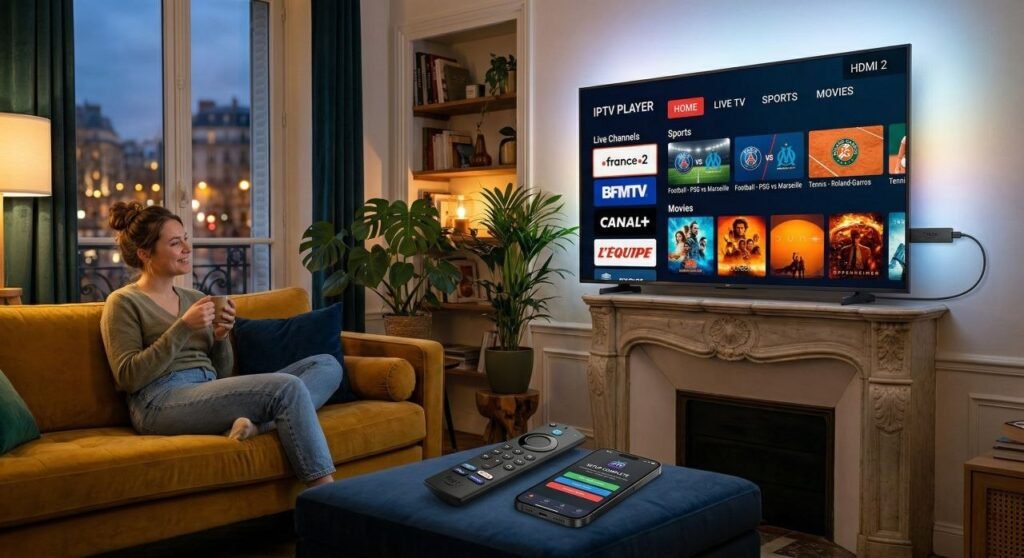
Installing IPTV on Firestick is a simple process that allows you to stream live TV channels, sports, and on-demand content directly on your television using an internet connection. Instead of relying on cable services, users in the USA can set up IPTV through a compatible app and start watching within minutes. The key steps involve preparing the Firestick, installing an IPTV player, and entering your subscription details.
The first step is to prepare your Firestick for IPTV apps. Since many IPTV players are not always available directly in the Amazon App Store, users often need to enable installations from unknown sources. This can be done in the Firestick settings under “My Fire TV” and then “Developer Options.” Once enabled, you can install a downloader app, which allows you to download IPTV applications safely. For example, a user might install a downloader tool, enter a URL provided by their IPTV service, and download the IPTV player app directly onto the device.
After installing the IPTV player, the next step is to connect your IPTV subscription. Most IPTV services provide login details, an M3U playlist, or portal URL. Once you open the app on your Firestick, you simply enter these details, and the channel list loads automatically. The interface usually displays categories such as sports, movies, news, and international channels. In a typical setup, someone in the USA could open the app, browse the program guide, and start watching live TV within seconds, just like using a traditional television menu.
To get the best experience, it is important to optimize both the device and the app. Make sure your Firestick is updated, has enough storage space, and is connected to a stable internet network. Using a well-designed IPTV app improves navigation, channel switching speed, and overall usability. Some apps also support features like favorites lists, catch-up TV, and electronic program guides, which make daily viewing easier. Taking a few minutes to configure these settings can significantly improve streaming performance and reduce common issues like buffering or slow loading.
Quick checklist for installing IPTV on Firestick:
- Enable apps from unknown sources in settings
- Install a downloader tool and IPTV player app
- Enter your IPTV subscription details (M3U or portal)
- Ensure stable internet connection and updated device
How to Choose a Reliable IPTV Subscription
Choosing a reliable IPTV subscription is essential if you want consistent streaming, good channel selection, and a smooth viewing experience on devices like Firestick, Smart TVs, or mobile apps. Not all IPTV services offer the same quality, so the goal is to find one that balances stable performance, relevant channels, and compatibility with your setup. A well-chosen service should feel as easy to use as traditional TV, but with more flexibility and content options.
The first thing to evaluate is channel quality and relevance. Instead of focusing only on the number of channels, check whether the service includes the content you actually watch—such as sports, movies, or international programming. For example, a viewer in the USA might prefer a service that reliably streams live sports and entertainment channels rather than one that lists thousands of channels that rarely work. A clean and organized channel guide, with categories like news, sports, and movies, makes everyday browsing much easier.
Streaming stability is another critical factor. A good IPTV service should provide consistent playback without buffering, especially during peak hours. This often depends on server quality and how well the service handles high traffic. For instance, watching a live event like a football match requires stable streams and fast channel switching. Services that offer anti-freeze technology and optimized servers usually perform better, particularly in regions where ISP throttling may affect streaming speed.
Device compatibility and app performance also play a major role in reliability. A strong IPTV subscription should work smoothly across common devices such as Firestick, Android TV, Smart TVs, and smartphones. The IPTV app itself should be responsive, easy to navigate, and support features like electronic program guides (EPG), favorites, and quick channel switching. Users who switch between devices—like watching on a TV at home and continuing on a phone—benefit most from services that maintain consistent performance across platforms.
Before subscribing, it is also smart to test the service if possible. Many providers offer short-term plans or trials, which allow users to evaluate streaming quality, channel availability, and app usability. This step helps avoid long-term commitments to services that may not meet expectations. Taking time to compare options based on real performance rather than marketing claims leads to a more reliable and enjoyable IPTV experience.
Quick checklist before choosing:
- Channels you actually watch (not just quantity)
- Stable streaming with minimal buffering
- Compatibility with your main devices
- Easy-to-use app with clear navigation
Common IPTV Problems
Common IPTV problems usually come down to streaming interruptions, app performance issues, or connection limitations rather than the concept of IPTV itself. While modern IPTV services are designed to deliver smooth and flexible viewing, users may occasionally experience issues like buffering, channels not loading, or poor video quality. Understanding these problems helps you quickly identify whether the issue comes from your internet connection, device, or the IPTV service itself.
One of the most frequent issues is buffering during live streaming. This often happens when the internet connection is unstable or when multiple devices are using the same network at the same time. For example, a user watching a live sports event on a Smart TV might experience pauses if someone else in the household is downloading large files or streaming videos simultaneously. In many cases, switching to a wired connection, improving Wi-Fi signal strength, or reducing network load can significantly improve playback.
Another common problem is channels not loading or taking too long to start. This can be related to server performance or the IPTV app being used. Some IPTV services may have overloaded servers during peak hours, which leads to delays when switching channels. On the device side, outdated apps, low storage space, or background processes can slow down performance. For instance, a Firestick with too many installed apps may struggle to load channels quickly until unnecessary apps are removed or the device is restarted.
Users may also face issues with streaming quality, such as low resolution or sudden drops in video clarity. This typically happens when the connection speed fluctuates or when the service automatically adjusts quality to avoid interruptions. In real-world usage, someone watching a movie might notice the quality drop from HD to standard definition if the network becomes unstable. Ensuring a consistent internet speed and using updated devices can help maintain better video quality.
Finally, compatibility issues can affect the overall experience. Not all IPTV apps work equally well on every device, and some services perform better on Android TV or Firestick than on older Smart TVs. Choosing the right combination of IPTV service and app is important for smooth navigation, fast channel switching, and reliable playback. Regular updates and proper setup can prevent many of these issues before they become frustrating.
Quick takeaway:
- Buffering is often caused by unstable or overloaded internet connections
- Slow channel loading may be linked to server or device performance
- Streaming quality depends on consistent internet speed
- Device and app compatibility affect overall usability