Best IPTV USA and Canada: How to Choose a Reliable IPTV Subscription in 2026
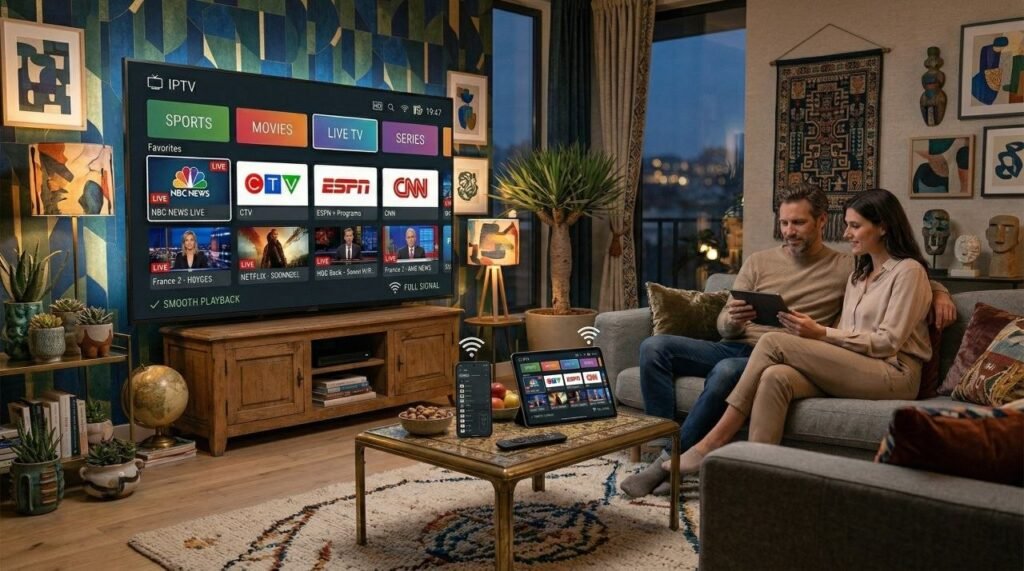
What Makes a Good IPTV Service in the USA and Canada
One of the first things to look at is streaming quality and stability. A strong service should deliver HD or Full HD streams without frequent buffering, even during peak hours when many users are watching live events. For example, someone watching a live sports match on a Smart TV in the evening should be able to switch channels quickly and watch without interruptions. Services that use optimized servers and anti-freeze technology tend to perform better, especially in regions where ISP throttling can affect streaming speed.
Channel relevance is another key factor. Instead of focusing only on the number of channels, it is more useful to check whether the service includes the content you actually watch. A viewer in the USA or Canada might want access to sports networks, international channels, movies, and entertainment content in one place. Well-organized IPTV services group these channels into categories like sports, movies, and news, making it easier to browse through the program guide without wasting time searching.
Device compatibility also plays a major role in overall quality. A reliable IPTV service should work smoothly on popular devices such as Firestick, Android TV, Smart TVs, and mobile apps. For example, a user might start watching on a television at home and continue on a smartphone while traveling. The service should maintain the same performance across all devices, with responsive navigation and fast channel switching. Apps that support features like favorites, electronic program guides, and multi-device access improve the experience significantly.
Finally, ease of use and consistency over time are what separate a premium IPTV experience from an average one. A good service should feel stable every day, not just during initial use. Testing the service, checking how quickly channels load, and evaluating the app interface can help you avoid unreliable options. In a competitive market, the best IPTV solutions are those that combine strong performance, relevant content, and simple usability for everyday viewing.
Quick checklist:
- Stable HD streaming with minimal buffering
- Channels that match your actual viewing habits
- Compatibility with Firestick, Smart TV, and mobile devices
- Easy navigation with clear channel categories
Channels, streaming quality, and device support
Channels, streaming quality, and device support are the three pillars that define whether an IPTV service is actually worth using on a daily basis. A good service is not just about offering a long list of channels—it must deliver the right content, play it smoothly, and work reliably across the devices you use most. When these three elements are balanced, the viewing experience feels seamless and comparable to traditional TV, but with far more flexibility.
Channel selection should always be evaluated based on relevance rather than quantity. Many services advertise thousands of channels, but users often watch only a small portion of them regularly. For example, a viewer in the USA or Canada may prioritize live sports, international content, and entertainment channels. A well-structured IPTV service organizes these channels into clear categories like sports, movies, and news, making it easy to navigate through the program guide. This organization becomes especially important when browsing on a TV screen, where quick access to favorite channels improves everyday usability.
Streaming quality is just as important as channel variety. Even the best channel lineup loses value if the streams buffer or drop in quality. High-definition and Full HD playback should be consistent, especially during live events such as sports or news broadcasts. In real-world use, someone watching a live match on a Smart TV expects instant loading and smooth playback without interruptions. Services that maintain stable servers and optimize data delivery tend to perform better, particularly in regions where network conditions may fluctuate.
Device support completes the experience by ensuring that the service works smoothly across different platforms. A reliable IPTV setup should function equally well on Firestick, Android TV, Smart TVs, and mobile devices. For instance, a user might start watching a movie on a Smart TV at home and later continue on a tablet or phone. This flexibility requires the service to maintain consistent performance, responsive navigation, and fast channel switching across all devices. Apps that support features like favorites, search, and electronic program guides further improve usability.
When evaluating a service, it helps to think of these three factors as a combined system rather than separate features. Strong channels, stable streaming, and full device compatibility work together to create a smooth and enjoyable experience. Ignoring any one of these elements often leads to frustration, even if the other two perform well.
Quick takeaway:
- Focus on channels you actually watch, not total count
- Stable HD streaming is essential for live content
- Device compatibility ensures flexibility across screens
Best IPTV for Firestick, Smart TV, and Mobile
The best IPTV setup for Firestick, Smart TV, and mobile devices is one that combines a reliable service with a well-optimized app and stable performance across all platforms. In practice, this means choosing a provider that delivers smooth streaming, supports multiple devices, and works seamlessly with the apps available on each system. Users today rarely watch content on a single screen, so flexibility across devices has become just as important as channel availability.
Firestick remains one of the most popular options because it is affordable, easy to use, and optimized for streaming. A typical user installs an IPTV player, logs in with their subscription, and accesses a full channel list within minutes. The interface usually includes categories like sports, movies, and live TV, allowing quick navigation with a remote control. For example, someone in the USA might watch a live sports event on a Firestick-connected TV in the evening and switch between channels smoothly without delays. The best IPTV services for Firestick prioritize fast loading times, responsive apps, and stable servers.
Smart TVs offer a more integrated experience since many models support IPTV apps directly through their app stores. Devices running Android TV or Google TV generally provide better compatibility and smoother performance compared to older systems. A user can install an IPTV app, connect their subscription, and browse channels using the TV remote. This setup is ideal for everyday viewing because it removes the need for extra hardware. However, performance still depends on the quality of the app and how well the TV handles streaming tasks.
Mobile devices add another layer of convenience by allowing users to watch content anywhere. IPTV apps on smartphones and tablets are designed for touch navigation, making it easy to switch channels, search for programs, or watch on-demand content while traveling. For instance, a viewer might start watching a movie on a Smart TV at home and continue on a phone later without changing services. This kind of multi-device experience is one of the main reasons IPTV services continue to grow in popularity.
When choosing a service, it is important to ensure that it performs consistently across all devices. Some services work well on Firestick but struggle on mobile, while others offer a balanced experience everywhere. The best approach is to test how the app behaves on your main device and check whether it maintains stable streaming, clear navigation, and fast channel switching on others as well.
Quick takeaway:
- Firestick is ideal for simple and fast IPTV setup
- Smart TVs provide an all-in-one viewing experience
- Mobile devices allow flexible viewing anywhere
What to look for before installing an IPTV app
Before installing an IPTV app, the most important step is to make sure the app is compatible with your device, stable in performance, and supported by your IPTV service. Many users rush into downloading the first app they find, but not all IPTV apps deliver the same experience. A good setup starts with choosing an app that works smoothly with your device—whether it’s Firestick, Smart TV, Android TV, or mobile—and supports the features you actually need for everyday viewing.
One key factor to check is app compatibility and system support. Some IPTV apps are designed specifically for certain platforms, such as Firestick or Android TV, while others may perform poorly on older Smart TVs. For example, a user installing an IPTV app on a Firestick should look for apps optimized for remote navigation, fast channel switching, and responsive menus. On mobile devices, the app should support touch controls and smooth playback. Choosing the wrong app can result in slow performance, crashes, or difficulty navigating channels.
Another important aspect is the user interface and features. A well-designed IPTV app should include a clear electronic program guide (EPG), organized channel categories, and simple navigation. In a typical scenario, a user opens the app and immediately sees categories like sports, movies, and live TV, making it easy to find content without confusion. Features like favorites lists, search functions, and catch-up TV can significantly improve the experience, especially for users who watch content regularly across different times of the day.
Performance and stability should also be evaluated before installing. Some apps may look good visually but struggle with loading streams or switching channels quickly. Reading user feedback or testing the app with a trial IPTV subscription can help identify whether the app handles streams efficiently. For instance, if an app takes too long to load channels or frequently freezes during playback, it can quickly become frustrating for everyday use.
Security and installation method are also worth considering. When installing apps outside official app stores—especially on devices like Firestick—users should ensure they are downloading from trusted sources. Enabling unknown sources is common for IPTV setups, but it should always be done carefully to avoid unreliable or unsafe apps. Choosing a trusted IPTV app reduces the risk of errors and ensures better long-term performance.
Quick checklist before installing:
- Confirm compatibility with your device (Firestick, Smart TV, mobile)
- Check for EPG, categories, and easy navigation
- Ensure fast loading and stable performance
- Use trusted sources for installation
Why app performance matters as much as channel count
App performance matters just as much as channel count because it directly affects how usable and enjoyable an IPTV service is on a daily basis. While many providers promote thousands of channels, the real experience depends on how quickly those channels load, how smoothly they play, and how easy it is to navigate between them. A large channel list loses its value if the app is slow, unstable, or difficult to use.
In real-world usage, performance issues become noticeable very quickly. For example, a user might open an IPTV app on a Firestick to watch a live sports event, but if the app takes several seconds to load channels or freezes during playback, the experience becomes frustrating. Even worse, slow navigation or delayed response when switching channels can make it difficult to browse content efficiently. This is why many experienced users prefer a slightly smaller but well-performing service over one with thousands of unreliable channels.
A well-optimized IPTV app ensures fast channel switching, stable playback, and responsive navigation. These elements are especially important on devices like Smart TVs and streaming sticks, where users rely on remote controls to move through menus. An app that is designed for performance will organize channels into clear categories, load program guides quickly, and maintain consistent streaming without interruptions. This allows viewers to focus on watching content rather than dealing with technical issues.
Another important aspect is how the app handles different types of content. Live TV, on-demand videos, and catch-up features all require efficient data handling. For instance, someone watching a movie on a Smart TV expects smooth playback without buffering, while a user browsing channels on a mobile device expects instant response when switching streams. Apps that are not optimized may struggle under these conditions, leading to delays, crashes, or reduced video quality.
When evaluating an IPTV service, it is important to test not only the channel lineup but also how the app performs in everyday situations. Check how quickly the app opens, how responsive it feels when navigating, and how stable the streams are over time. A good balance between channel availability and app performance ensures a much better overall experience than focusing on channel count alone.
Quick takeaway:
- Fast loading and smooth navigation are essential for daily use
- Stable playback matters more than having thousands of channels
- Well-optimized apps improve both performance and usability
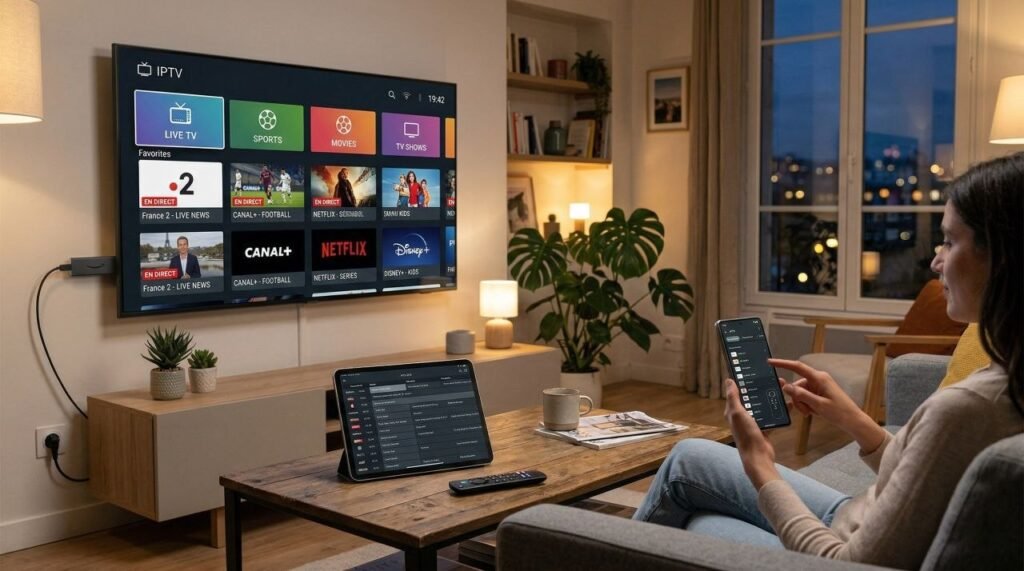
How to Choose the Best IPTV Subscription
Choosing the best IPTV subscription comes down to finding a balance between content, performance, and reliability rather than simply picking the cheapest or the one with the most channels. A high-quality service should deliver stable streaming, include the channels you actually watch, and work smoothly across your preferred devices. For users in the USA and Canada, where network conditions and device usage vary, making the right choice can significantly improve the overall viewing experience.
The first step is to evaluate the channel lineup based on your personal viewing habits. Instead of being influenced by large channel numbers, focus on whether the service includes the content you regularly watch—such as live sports, movies, or international channels. For example, a user who mainly watches sports and entertainment will benefit more from a well-curated package than from a service offering thousands of rarely used channels. A clear program guide with organized categories like sports, movies, and news also makes it easier to browse and use daily.
Streaming stability is another critical factor when selecting a subscription. A reliable IPTV service should provide consistent playback without buffering, especially during peak hours or live events. In practical terms, this means being able to watch a football match or a live broadcast without interruptions. Services that invest in strong servers and optimized delivery systems tend to offer better performance, particularly in regions where internet providers may slow down streaming traffic.
Device compatibility should also be considered before subscribing. A good IPTV subscription should work seamlessly on devices such as Firestick, Smart TVs, Android TV boxes, and mobile apps. For example, a viewer might start watching on a TV at home and continue on a smartphone later. The service should maintain the same level of performance across all devices, with fast loading times and smooth navigation. This flexibility ensures that the subscription remains useful in different situations and locations.
Finally, it is always recommended to test a service before committing long-term. Many IPTV providers offer short-term plans or trial access, allowing users to evaluate streaming quality, app performance, and channel availability. This helps avoid choosing a service that looks good on paper but performs poorly in real use. Taking the time to compare options based on real experience leads to a more reliable and satisfying IPTV setup.
Quick checklist:
- Choose channels based on your actual viewing needs
- Prioritize stable streaming over channel quantity
- Ensure compatibility with your main devices
- Test the service before committing
Monthly plans, premium IPTV options, and service quality
Monthly IPTV plans, premium options, and overall service quality are key factors that determine whether a subscription is worth it for long-term use. The best choice is not always the cheapest plan, but the one that delivers consistent performance, reliable access to channels, and a smooth viewing experience across your devices. Understanding how these elements differ helps you avoid common mistakes and choose a service that fits your needs.
Monthly plans are often the most practical starting point, especially for new users. They allow you to test the service without a long-term commitment. For example, someone using a Firestick or Smart TV in the USA might subscribe for one month to evaluate streaming quality, channel availability, and app performance. If the service meets expectations—stable streams, fast channel switching, and clear HD playback—it can then be worth considering longer plans. Monthly subscriptions also give flexibility if your viewing habits change or if you want to try different IPTV services.
Premium IPTV options usually focus on higher service quality rather than just offering more channels. These plans often include better server stability, faster loading times, and more reliable access during peak hours. For instance, when watching live sports or major events, premium services are less likely to buffer or drop in quality. They may also provide better-organized channel lists, updated content libraries, and support for multiple devices. While these options can be slightly more expensive, they often deliver a noticeably smoother experience for everyday viewing.
Service quality ultimately depends on how well all components work together: server performance, app reliability, and device compatibility. A high-quality IPTV service should maintain stable streams even when many users are online, and it should work consistently on Smart TVs, Firestick, and mobile apps. In real-world use, this means being able to switch from a movie to a live sports channel without delays or interruptions. Features like fast channel switching, clear program guides, and minimal downtime are strong indicators of a well-maintained service.
When comparing IPTV subscriptions, it helps to look beyond pricing and focus on long-term usability. A slightly higher monthly cost can often result in better performance, fewer technical issues, and a more enjoyable experience overall. Testing different plans, checking how the service performs during peak hours, and ensuring it works well on your main devices are practical steps that lead to a better decision.
Quick takeaway:
- Monthly plans are ideal for testing flexibility and performance
- Premium IPTV focuses on stability, speed, and better streaming quality
- Service quality matters more than price for long-term use
What to check before paying for an IPTV sub
Before paying for any IPTV subscription, you should verify a few critical factors to avoid poor streaming quality, unreliable services, or wasted money. The best IPTV experience comes from a combination of stable performance, relevant channels, and compatibility with your devices—not just an attractive price or a large channel list.
Start by checking the actual channel lineup and content relevance. Many services advertise thousands of channels, but what matters is whether they include the channels you will actually watch. For example, a viewer in the USA or Canada may want a mix of international channels, sports coverage, and entertainment networks. It is more useful to have a well-organized selection of working channels than a massive list filled with broken or rarely used streams. A good IPTV service should clearly present categories like sports, movies, and news, making navigation simple and practical.
Streaming quality and stability should be your next priority. A reliable service should deliver consistent HD or Full HD streams without buffering, especially during peak hours such as live sports events. If possible, always test the service before committing to a long-term plan. For instance, a short trial on a Firestick or Smart TV can quickly reveal whether channels load fast, switch smoothly, and maintain quality over time. This real-world testing is often more valuable than any advertised feature.
Another important factor is device compatibility and app performance. The IPTV service should work smoothly on your main devices, whether that is a Smart TV, Firestick, Android TV box, or mobile phone. A well-designed IPTV app should offer fast navigation, a clear program guide, and minimal lag. If the app feels slow or crashes frequently, it will affect your daily viewing experience regardless of how good the channel list is.
You should also consider service reputation and support. Reliable IPTV services usually provide stable servers, regular updates, and responsive customer support. If something goes wrong—such as login issues or channel outages—having access to support can make a big difference. Reading user feedback or testing a short subscription can help you identify whether the service maintains consistent performance over time.
Finally, review pricing structure and flexibility. Monthly plans are often safer for first-time users, allowing you to evaluate performance before committing to longer subscriptions. A slightly higher price is often justified if the service delivers better stability, faster streaming, and fewer interruptions.
Quick takeaway:
- Focus on channel relevance, not just quantity
- Test streaming quality and stability before committing
- Ensure compatibility with your main devices
Common IPTV Problems and How to Avoid Them
Common IPTV problems usually come down to three areas: buffering, app performance, and unstable service quality—but most of these issues can be avoided with the right setup and provider. Understanding what causes these problems helps you fix them quickly and choose a more reliable service from the start.
One of the most frequent issues users face is buffering during live streams. This often happens when the internet connection is unstable or when too many devices are using the same network at once. For example, if someone is watching a live football match on a Smart TV while others are streaming videos or downloading files, the connection may struggle to keep up. To avoid this, using a strong Wi-Fi signal or switching to a wired Ethernet connection can significantly improve streaming stability. In many cases, upgrading your router or reducing background internet usage also helps maintain smooth playback.
Another common problem is slow or unresponsive IPTV apps. Even with a good internet connection, a poorly optimized app can make navigation frustrating. Channels may take too long to load, or the app may freeze when switching between programs. This is especially noticeable on older devices or when the app has not been updated. For example, users on Firestick or Android TV devices may experience better performance by clearing the app cache, restarting the device, or using a more reliable IPTV player. Choosing a well-designed app is just as important as selecting the right service.
Service instability is also a major factor. Not all IPTV services maintain the same level of server performance, and some may struggle during peak hours when many users are connected. This can lead to channels not loading, streams dropping, or inconsistent video quality. A reliable IPTV provider typically invests in stable servers that handle high traffic without interruptions. Testing a service during busy times—such as evenings or live sports events—can give a clear idea of its real performance.
Device compatibility can also affect the overall experience. Some services work better on certain devices than others, and using outdated hardware can limit performance. For example, a modern Smart TV, Android TV box, or Firestick will usually provide smoother streaming than older devices. Ensuring your device supports updated apps and stable playback formats can prevent many technical issues before they start.
Quick takeaway:
- Buffering is often caused by weak or overloaded internet connections
- App performance depends on device quality and software optimization
- Reliable services and compatible devices reduce most IPTV issues
Buffering, freezing, and unstable streams
Buffering, freezing, and unstable streams are the most common issues users experience when watching IPTV, and they are usually caused by network limitations, device performance, or server quality. The key to avoiding these problems is understanding where they come from and how to fix them before they interrupt your viewing experience.
Buffering typically occurs when your device cannot receive data fast enough to continue playing the stream smoothly. This often happens when the internet connection is too slow, unstable, or shared between multiple devices. For example, if you are watching a live sports event on a Smart TV while others in the household are streaming videos or gaming online, the available bandwidth may drop, causing pauses or loading delays. Switching to a wired Ethernet connection, upgrading your internet plan, or reducing background usage can significantly improve stability.
Freezing issues are slightly different and often relate to how the IPTV app or device processes the stream. A frozen screen may occur if the app crashes, the device runs out of memory, or the stream fails to refresh properly. This is common on older devices or when apps are not updated regularly. For instance, users on Firestick or Android TV devices may notice freezing when switching channels quickly or after long viewing sessions. Restarting the device, clearing app cache, or reinstalling the IPTV app can often resolve these issues.
Unstable streams are frequently linked to the IPTV service itself. Not all providers maintain the same level of server performance, and weaker services may struggle during peak viewing hours. This can lead to channels dropping, quality fluctuating between HD and lower resolutions, or streams stopping entirely. A reliable IPTV service should provide consistent playback even when many users are connected, especially during live events. Testing a service during busy hours is one of the best ways to evaluate its real stability.
Device and setup also play a major role in stream performance. Modern devices such as Smart TVs, Android TV boxes, and updated streaming sticks handle IPTV streams more efficiently than outdated hardware. Positioning your router closer to the device, using dual-band Wi-Fi, or optimizing your home network can further improve performance. In many cases, small adjustments to your setup can eliminate most streaming issues without needing to change services.
Quick takeaway:
- Buffering is usually caused by slow or overloaded internet connections
- Freezing often comes from app or device limitations
- Stable IPTV services and optimized setups reduce most streaming problems
How device setup affects IPTV performance
Device setup plays a major role in IPTV performance, often making the difference between smooth streaming and constant buffering or freezing. Even with a good IPTV service, poor device configuration or outdated hardware can lead to slow channel loading, unstable streams, and frustrating navigation. Optimizing your setup ensures that the service performs as intended across all your devices.
One of the most important factors is the type of device you use. Modern devices such as Smart TVs, Android TV boxes, and streaming sticks like Firestick are designed to handle high-definition streaming efficiently. Older devices, on the other hand, may struggle with newer apps or high-bitrate streams. For example, a user watching IPTV on a recent Android TV device will usually experience faster channel switching and better playback compared to someone using an outdated Smart TV system. Choosing a device with sufficient processing power and updated software is essential for consistent performance.
App optimization is another key element. IPTV apps act as the interface between the service and your device, and their performance can directly affect your experience. A well-optimized app should load quickly, allow smooth navigation between categories, and switch channels without delays. If the app is poorly optimized or outdated, it may freeze, crash, or take too long to load streams. Regularly updating the app, clearing cache, and avoiding unnecessary background apps can significantly improve responsiveness.
Network setup also interacts closely with device performance. Even the best device will struggle if the connection is weak or unstable. For example, a Firestick connected through a weak Wi-Fi signal may experience buffering, while the same device connected via Ethernet or strong Wi-Fi will perform much better. Positioning your router correctly, using dual-band Wi-Fi, or connecting devices directly with a cable can improve streaming quality. This is especially important in households where multiple users are online at the same time.
Storage and system resources should not be overlooked either. Devices with limited storage or memory can slow down over time, especially if multiple apps are installed. Clearing unused apps, freeing up space, and restarting the device regularly helps maintain performance. For instance, users who keep their streaming device clean and updated often notice faster navigation and fewer playback issues compared to overloaded devices.
Ultimately, a well-optimized device setup ensures that IPTV services deliver stable streams, fast channel switching, and a smoother overall experience. Instead of focusing only on the service itself, improving your device and network environment can solve many common issues and enhance daily viewing.
Quick takeaway:
- Modern, updated devices provide better IPTV performance
- Optimized apps and cleared storage improve speed and stability
- Strong network setup is essential for smooth streaming
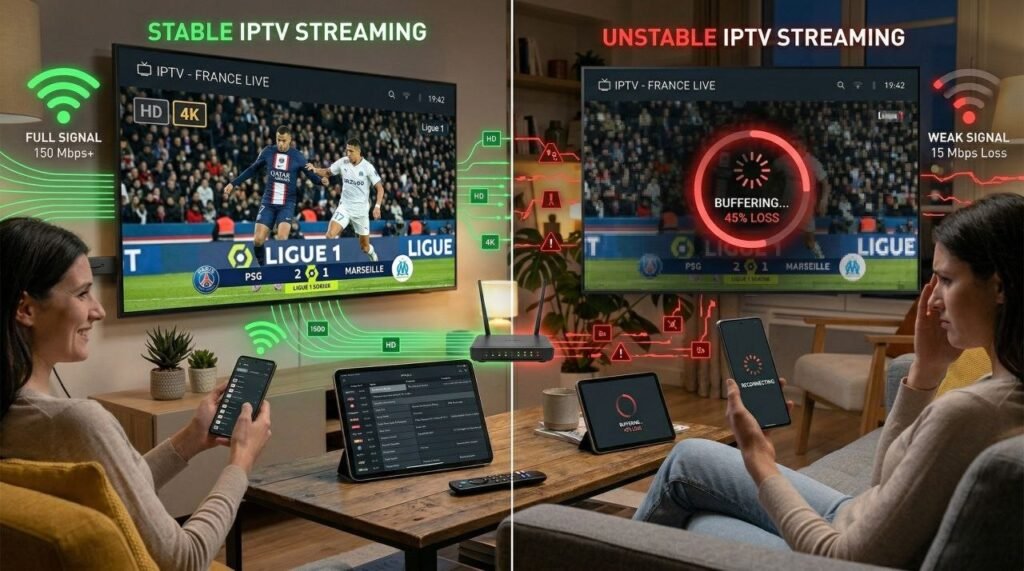
Best IPTV Setup for Smooth Everyday Streaming
The best IPTV setup for smooth everyday streaming combines a reliable device, a stable internet connection, and a well-optimized app. When these three elements work together, you get fast channel loading, consistent HD playback, and an experience that feels as seamless as traditional television—without interruptions or technical issues.
Start with choosing the right device. Modern streaming hardware such as Smart TVs with updated systems, Android TV boxes, or Firestick devices are built specifically for handling high-quality streaming. For example, a user watching live sports or movies on a recent Firestick will usually experience faster navigation and fewer delays compared to older TV systems. Devices with good processing power and regular updates ensure that IPTV apps run smoothly and channels switch quickly.
Next, focus on your internet setup. A stable connection is essential for avoiding buffering and maintaining consistent streaming quality. For everyday use, a strong Wi-Fi signal may be enough, but for the best results—especially during live events—an Ethernet connection is often more reliable. In real-world scenarios, users who connect their streaming device directly to the router tend to experience fewer interruptions than those relying on weak wireless signals. Reducing network congestion by limiting background downloads or streaming on other devices can also improve performance.
App selection and optimization are equally important. A well-designed IPTV app should provide a clear interface, fast channel switching, and a structured program guide with categories like sports, movies, and news. For instance, users who install a stable IPTV player on their Smart TV or Android device often benefit from smoother navigation and better playback compared to poorly optimized apps. Keeping the app updated, clearing cache regularly, and avoiding unnecessary background processes can help maintain consistent performance.
Finally, consider overall system balance. Even the best IPTV service will not perform well if one part of the setup is weak. A high-quality service paired with a modern device and optimized network creates a stable environment for daily viewing. This means you can switch between channels, watch live events, and enjoy on-demand content without delays or interruptions. A well-balanced setup is what transforms IPTV from a basic streaming option into a reliable everyday entertainment solution.
Quick takeaway:
- Use modern devices like Smart TVs, Android TV boxes, or Firestick
- Ensure a stable internet connection, preferably with Ethernet
- Choose and maintain a well-optimized IPTV app for smooth performance
Firestick and Smart TV setup basics
Firestick and Smart TV setup is the foundation of a smooth IPTV experience, and getting it right from the start can eliminate most common streaming issues. A proper setup ensures fast app performance, stable playback, and easy navigation through channels, making everyday viewing simple and reliable.
The first step is choosing the right device configuration. Smart TVs with updated operating systems (such as Android TV or Google TV) allow users to install IPTV apps directly, while Firestick devices offer a flexible and affordable alternative for almost any television. For example, a user with an older TV can connect a Firestick and instantly transform it into a modern streaming platform. Both options support IPTV apps, but Firestick often provides faster updates and broader app compatibility.
Once the device is ready, installing a reliable IPTV app is essential. Most IPTV services require a player app where users enter their subscription details. On Firestick, this typically involves installing apps through the app store or using a downloader tool, while Smart TVs may allow direct installation from their built-in stores. A well-designed app should display a clear channel list, organized categories like sports and movies, and a responsive program guide. In the interface described earlier—where channels are grouped into sections—this structure helps users quickly find and switch between content.
Network setup also plays a major role in device performance. Even with a good IPTV service, weak Wi-Fi can cause buffering or slow loading. For example, placing your Firestick too far from the router may reduce signal strength and affect stream quality. Using a strong Wi-Fi connection or connecting the device via Ethernet (when possible) improves stability. In households with multiple users, limiting background downloads or using a modern router can further enhance performance.
Another important aspect is device maintenance and optimization. Over time, streaming devices can slow down due to cached data or too many installed apps. Regularly clearing cache, updating the system, and restarting the device can keep performance smooth. For instance, users who maintain their Firestick or Smart TV often experience faster channel switching and fewer app crashes compared to those who neglect basic maintenance.
A well-configured Firestick or Smart TV setup creates a reliable environment where IPTV services can perform at their best. With the right combination of device, app, and network setup, viewers can enjoy stable streaming, quick navigation, and a seamless entertainment experience.
Quick takeaway:
- Firestick and Smart TVs are the easiest ways to run IPTV apps
- Strong internet connection improves streaming stability
- Regular device maintenance helps avoid performance issues
Simple ways to improve IPTV stability at home
Improving IPTV stability at home comes down to optimizing three key elements: your internet connection, your device setup, and how your network is used. Small adjustments in these areas can significantly reduce buffering, prevent freezing, and ensure smoother everyday streaming without needing to change your service.
The first and most effective improvement is strengthening your internet connection. IPTV streaming depends on consistent data flow, not just speed. For example, a household with fast internet can still experience buffering if the connection is unstable or overloaded. Placing your router closer to your device, upgrading to a modern dual-band router, or switching from Wi-Fi to a wired Ethernet connection can make a noticeable difference. In real-world setups, users who connect their Firestick or Smart TV directly to the router often see immediate improvements in stream stability.
Managing network usage is another simple but powerful step. When multiple devices are streaming, downloading, or gaming at the same time, bandwidth is divided and IPTV performance can suffer. For instance, watching a live sports event while others are using high-bandwidth apps may cause buffering or drops in quality. Limiting background activity, scheduling downloads for later, or using Quality of Service (QoS) settings on your router can help prioritize streaming traffic and maintain consistent playback.
Device optimization also plays a key role in stability. Even with a good connection, a slow or overloaded device can cause freezing or lag. Regularly restarting your Smart TV, Firestick, or Android device, clearing app cache, and removing unused apps helps keep performance smooth. Users who maintain their devices often notice faster channel switching and fewer interruptions compared to those using cluttered or outdated systems.
Another practical tip is choosing the right IPTV app and keeping it updated. A well-optimized app handles streams more efficiently and reduces the chances of crashes or slow loading. In setups where channels are organized clearly and load quickly, viewers can switch between programs without delays, improving the overall experience.
Ultimately, improving IPTV stability does not require complex changes. By optimizing your network, managing device performance, and maintaining your setup, you can achieve a more reliable and enjoyable streaming experience at home.
Quick takeaway:
- Use strong Wi-Fi or Ethernet for stable streaming
- Reduce network congestion from other devices
- Keep your device and IPTV app optimized and updated
How to Compare IPTV Services Without Falling for Hype
Comparing IPTV services without falling for hype means focusing on real performance and usability rather than marketing claims like “10,000+ channels” or “best IPTV ever.” The most reliable way to choose a service is to evaluate how it actually works in everyday use—how stable the streams are, how easy the app is to use, and whether it fits your viewing habits.
One of the biggest mistakes users make is judging a service only by the number of channels. In reality, a smaller, well-maintained channel list is often better than a massive library filled with broken or low-quality streams. For example, a user who mainly watches sports, movies, and a few international channels will benefit more from a clean, organized lineup than from thousands of channels they never use. A good IPTV service should clearly display categories and allow quick navigation without confusion.
Another important factor is real streaming performance. Many providers advertise HD or even 4K quality, but the actual experience depends on server stability and how well the service handles peak hours. For instance, a service may work perfectly during the day but start buffering during live events when many users are connected. Testing the service during busy times—such as evenings or sports matches—is one of the most effective ways to evaluate its reliability.
App quality is often overlooked but plays a major role in the overall experience. A well-designed IPTV app should load quickly, switch channels smoothly, and provide a clear program guide. If the app is slow, crashes frequently, or feels difficult to navigate, it will affect your daily use regardless of how good the channel list is. For example, users on Firestick or Smart TV devices usually prefer apps that are optimized for remote control navigation and fast browsing.
Pricing can also be misleading if not evaluated properly. Extremely cheap offers may seem attractive, but they often come with unstable streams or limited support. On the other hand, higher-priced services should justify their cost with better performance, consistent updates, and reliable access. Choosing a monthly plan first is a practical way to test whether the service meets your expectations before committing long term.
To compare services effectively, focus on how they perform in real conditions rather than what they promise. Look for consistency, usability, and compatibility with your devices. This approach helps you avoid hype and choose a service that delivers a stable and enjoyable streaming experience.
Quick takeaway:
- Ignore channel count hype and focus on usable content
- Test streaming quality during peak hours
- Prioritize app performance and real user experience
Red flags, fake promises, and low-quality deals
Red flags, fake promises, and low-quality IPTV deals are surprisingly common, and recognizing them early can save you from unstable streams, wasted money, and constant frustration. The most important rule is simple: if an offer sounds too good to be true, it usually is. Reliable services focus on performance and consistency, while low-quality providers rely on exaggerated claims to attract users.
One of the clearest red flags is unrealistic marketing promises. Many services advertise “10,000+ channels,” “instant 4K everywhere,” or “zero buffering guaranteed,” but these claims rarely reflect real performance. In practice, even high-quality IPTV services depend on internet conditions and server load. For example, a provider promising perfect streaming at all times is ignoring the reality of network limitations. Instead of focusing on numbers, it is better to look at how well the service delivers the channels you actually watch and whether those streams are stable.
Another warning sign is extremely low pricing combined with long-term commitments. Some providers offer very cheap yearly plans that seem like a great deal at first. However, these services often lack stable servers, regular updates, or proper support. For instance, a user might subscribe to a low-cost plan only to find that channels stop working after a few weeks or buffering becomes constant. Choosing flexible monthly plans first is a safer approach, allowing you to test real performance before committing.
Poor app quality and lack of support are also strong indicators of low-quality services. If the IPTV app feels outdated, crashes frequently, or has a confusing interface, it will affect your daily experience. Similarly, if there is no clear way to contact support or get help when something goes wrong, it becomes difficult to resolve issues. Reliable IPTV services usually provide structured apps, regular updates, and some level of customer assistance.
Another common issue is inconsistent channel availability. Some services list many channels, but in reality, a large portion may not work or may load very slowly. For example, users may find that certain sports or entertainment channels fail during peak hours. This inconsistency is often due to weak server infrastructure or poor content management.
To avoid these problems, focus on transparency and real usability. A trustworthy IPTV service will clearly present its features, work reliably across devices, and maintain stable performance over time. Testing the service, checking how it performs during busy periods, and evaluating app usability are practical ways to filter out low-quality deals.
Quick takeaway:
- Avoid services with unrealistic promises and exaggerated claims
- Be cautious with very cheap long-term plans
- Prioritize stability, app quality, and real performance
What a reliable IPTV service should offer
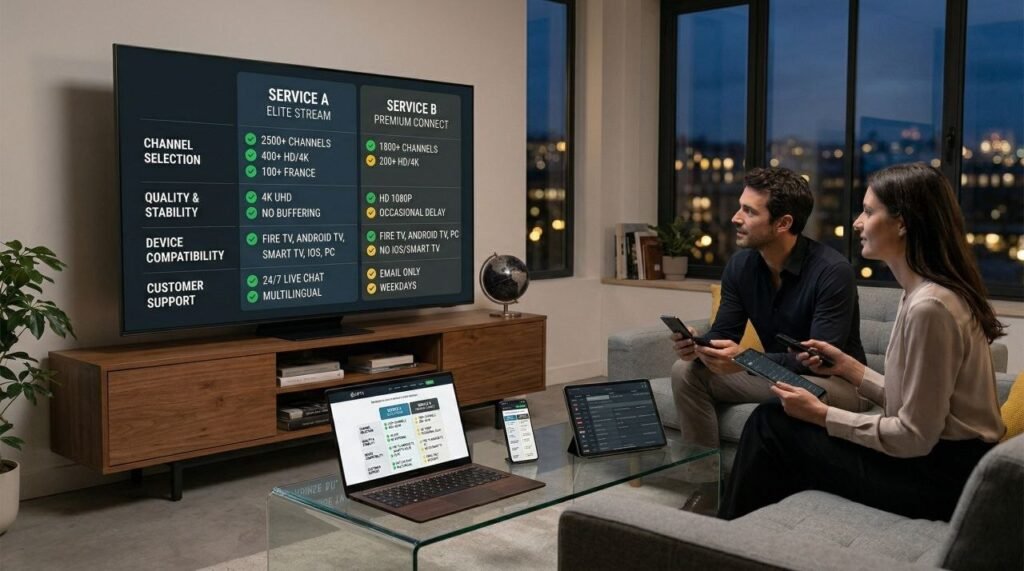
A reliable IPTV service should offer consistent streaming, relevant channels, and a smooth user experience across all your devices. The difference between a high-quality service and a poor one is not just in what it offers on paper, but in how well it performs in everyday use—especially during peak hours and live events.
First, stability and streaming performance are essential. A trustworthy service should provide consistent HD or Full HD playback without constant buffering or interruptions. For example, when watching live sports or news, the stream should load quickly and remain stable even when many users are connected. Reliable IPTV services invest in strong servers that handle traffic efficiently, ensuring that channels do not freeze or drop unexpectedly. This is one of the most important factors to check before choosing any subscription.
Second, channel quality and organization matter more than sheer quantity. A good IPTV provider focuses on delivering working, well-maintained channels rather than advertising thousands of options that rarely function properly. For instance, users should be able to access clearly categorized sections such as sports, movies, and entertainment, with channels that load quickly and play smoothly. This type of structured interface makes everyday viewing easier and more enjoyable.
Another key element is app performance and usability. A reliable IPTV service should be paired with a well-designed app that allows fast navigation, quick channel switching, and a clear program guide. Whether using a Smart TV, Firestick, or mobile device, the app should feel responsive and stable. For example, users should be able to switch between a movie and a live channel without delays or crashes. Regular updates and compatibility with modern devices are also strong indicators of a well-maintained service.
Customer support and service transparency are also important. A quality IPTV provider should offer clear information about features, supported devices, and subscription options. If issues arise—such as login problems or channel outages—responsive support can make a significant difference. Services that lack communication or clear guidance often lead to frustration over time.
Finally, flexibility in subscription plans adds value. Monthly plans allow users to test the service before committing, while premium options may offer better stability and performance. Choosing a service that balances price, quality, and reliability ensures a better long-term experience.
Quick takeaway:
- Reliable IPTV services prioritize stable streaming and HD quality
- Organized channel lists improve usability more than large channel counts
- App performance and device compatibility are essential for daily use