Varodatic IPTV 2026: Premium IPTV Service for Stable Streaming Worldwide
What is Varodatic IPTV
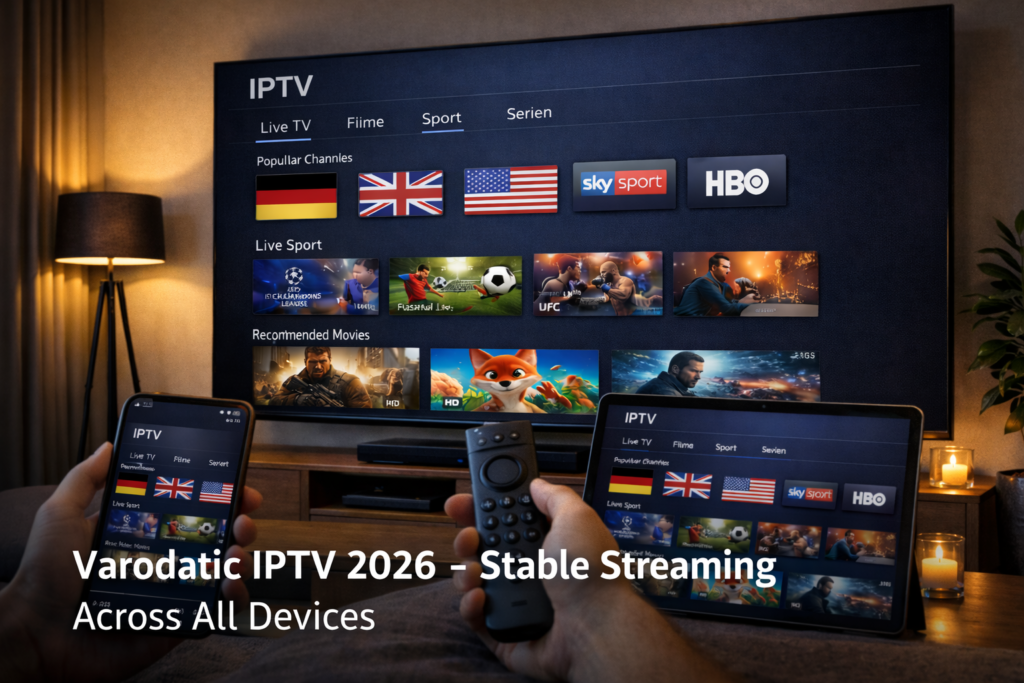
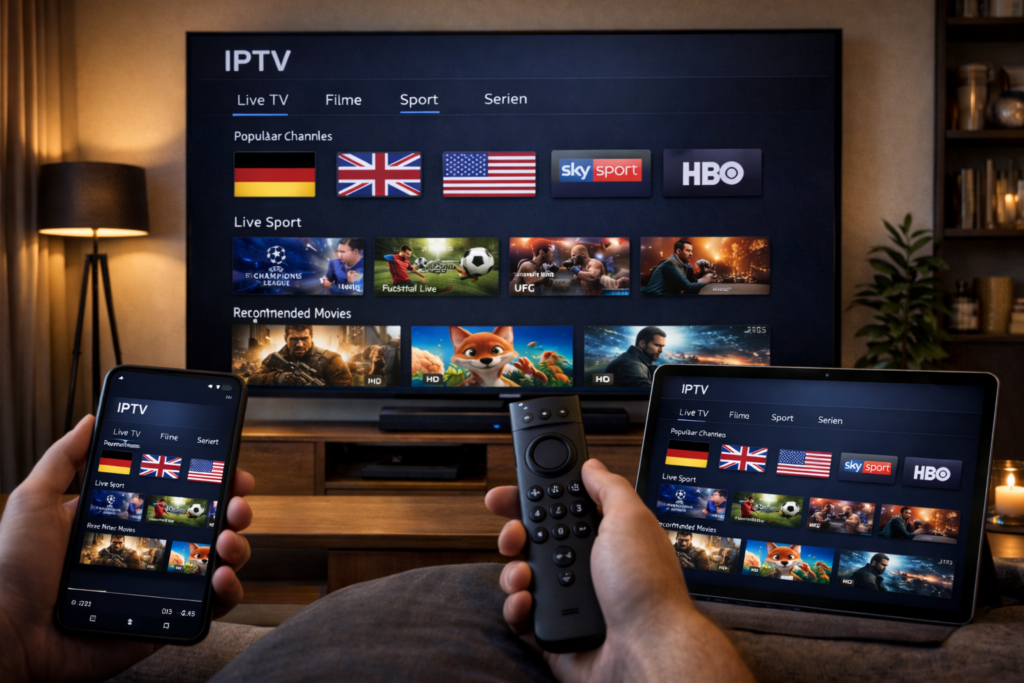
Varodatic IPTV is an internet-based television service that delivers live channels, movies, and international content directly through online streaming instead of traditional cable or satellite systems. In simple terms, it allows users to access a wide range of global entertainment on devices like Smart TVs, Firestick, Android TV, and mobile apps using a single subscription. The setup illustrated above reflects how modern IPTV platforms bring together multiple categories—sports, movies, and live TV—into one unified interface that is easy to navigate.
Unlike traditional broadcasting, Varodatic IPTV works by sending video streams from remote servers to your device in real time. When you select a channel, the content is instantly delivered through your internet connection, allowing you to watch without needing any physical installation like dishes or cables. For example, a user in Europe can access international channels or live sports events just as easily as someone in the USA, making it a flexible option for people who want global access from one platform. This is one of the reasons many users are switching to modern iptv services instead of relying on local providers.
Another important aspect is device flexibility. Varodatic IPTV is designed to work across multiple platforms, meaning you can start watching on a Smart TV at home and continue on a smartphone while traveling. In real-world use, this is especially useful for users who move between locations or prefer watching content on different screens throughout the day. The interface typically includes organized categories, favorites, and program guides, which makes browsing content faster and more intuitive compared to older TV systems.
From a practical perspective, choosing a service like Varodatic IPTV comes down to how well it performs in everyday conditions. Users should look at factors such as streaming stability, app responsiveness, and compatibility with their main devices. For instance, testing how quickly channels load or how smoothly the app runs during peak hours can give a clear idea of whether the service is reliable. A well-performing IPTV platform should feel consistent, simple to use, and capable of delivering content without interruptions.
Quick takeaway:
- Varodatic IPTV streams global content by internet instead of cable
- Works on Smart TV, Firestick, and mobile devices
- Offers flexible, multi-device viewing across locations
How Varodatic IPTV Works Across Devices
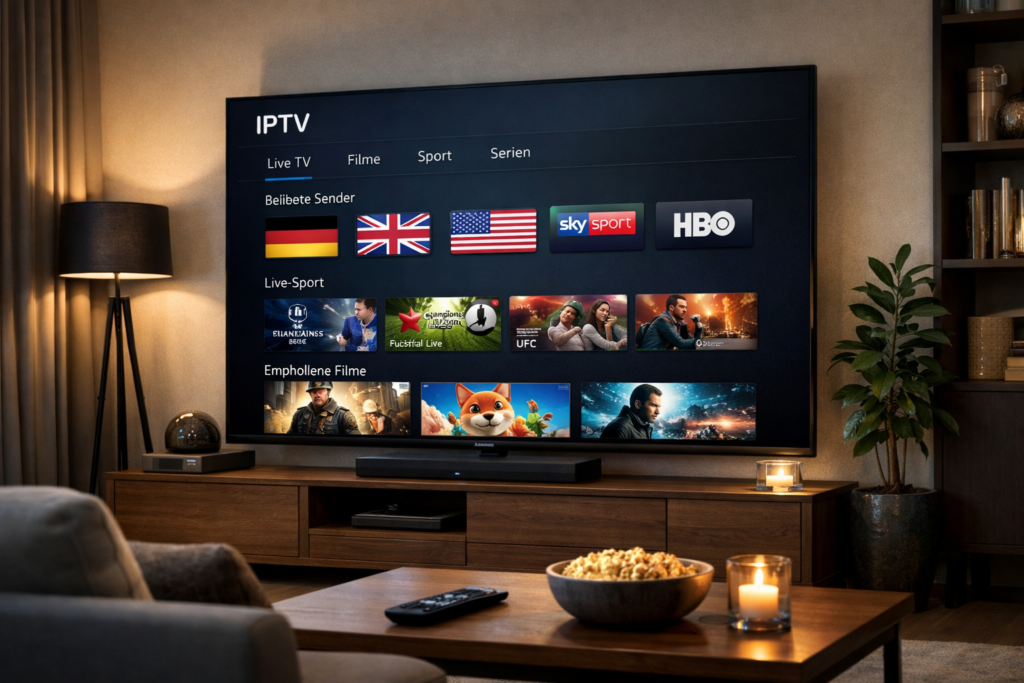
Varodatic IPTV works across devices by delivering streaming content through dedicated apps that are compatible with modern platforms like Smart TVs, Firestick, Android TV, and mobile devices. Instead of being limited to one screen, users can access the same subscription on multiple devices, allowing seamless viewing whether at home or on the go. The setup shown above reflects this multi-device flexibility, where the same interface and channel list are available across different screens without interruption.
In practical terms, the process is simple. After subscribing, users receive login credentials or a playlist link, which is then added to an IPTV app. Once connected, the app loads a full channel list organized into categories such as sports, movies, and live TV. For example, a user might install the app on a Firestick connected to a living room TV, browse channels using a remote, and switch instantly between live broadcasts. Later, the same account can be used on a smartphone to continue watching without needing a different setup. This consistency across devices is one of the key advantages of modern iptv services.
Each device offers a slightly different experience depending on how it is used. On Smart TVs, the focus is on comfortable viewing with remote navigation and large-screen playback. Firestick devices are popular because they are easy to install and optimized for streaming apps, making them a practical choice for both new and experienced users. Mobile devices, on the other hand, prioritize flexibility—allowing users to watch content while traveling, commuting, or moving between locations. This adaptability ensures that the viewing experience remains consistent regardless of where or how the service is used.
Performance across devices depends on both the app optimization and the user’s setup. A well-designed IPTV app should load quickly, respond smoothly to navigation, and allow fast channel switching. For instance, if a user switches from a movie to a live sports channel, the transition should be nearly instant without buffering or delays. Ensuring that devices are updated, apps are optimized, and internet connections are stable plays a major role in maintaining this level of performance.
From a decision standpoint, users should test how the service behaves on their primary device before fully committing. Some platforms may perform better on Firestick than on older Smart TVs, while others offer balanced performance across all devices. Checking responsiveness, stream stability, and usability across multiple screens helps ensure that the service delivers a reliable and smooth experience in everyday use.
Quick takeaway:
- Works across Smart TV, Firestick, Android TV, and mobile
- Same account can be used on multiple devices
- Performance depends on app quality and device setup
Key Features of Varodatic IPTV
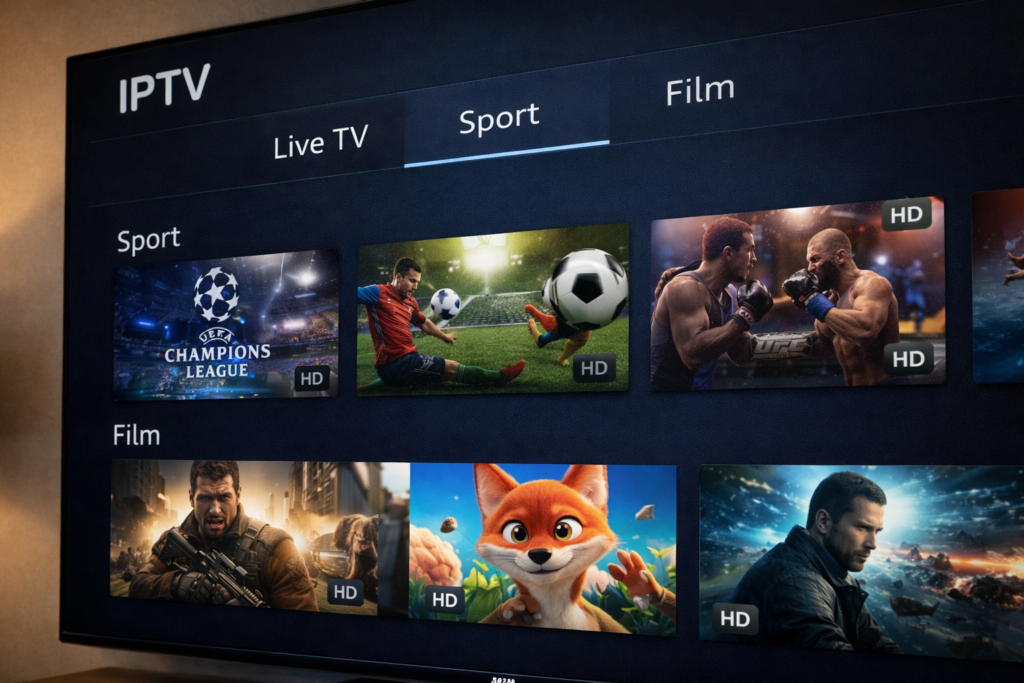
Varodatic IPTV stands out by combining content variety, streaming performance, and multi-device usability into a single service designed for everyday viewing. Instead of focusing only on channel quantity, it aims to deliver a balanced experience where users can access relevant content, navigate easly, and stream without interruptions. The interface shown above reflects this approach, with clearly organized categories and a structure that prioritizes usability over complexity.
One of the main features is the wide range of available channels and content categories. Users can access live TV, sports, movies, and international channels from different regions, all grouped into intuitive sections. For example, a viewer interested in live sports can quickly open the sports category and start watching without scrolling through unrelated channels. This type of organization saves time and makes the platform more practical for daily use compared to services that overload users with unstructured lists.
Streaming quality is another key element. A strong IPTV service should provide consistent HD or Full HD playback with fast loading times and minimal buffering. In real-world scenarios, this means being able to switch between channels instantly or watch a full movie without interruptions. Services like this typically rely on optimized servers to maintain performance, especially during peak hours when many users are online. This is where premium iptv services differentiate themselves—by focusing on stability rather than just offering more content.
Device compatibility also plays a central role. Varodatic IPTV is designed to work across Smart TVs, Firestick, Android TV, and mobile devices, allowing users to access the same content on different screens. For instance, someone might watch a live broadcast on a TV at home and later continue on a smartphone while traveling. The experience should remain consistent across devices, with responsive navigation and fast channel switching regardless of the platform used.
Additional features such as electronic program guides (EPG), favorites lists, and search functions further improve usability. These tools help users find content quickly and personalize their viewing experience. For example, saving favorite channels allows faster access without browsing through the entire list each time. These small but important features contribute to a smoother and more efficient IPTV experience overall.
From a practical standpoint, the value of these features depends on how well they perform together. A good IPTV setup should feel stable, easy to navigate, and reliable over time. Users should focus on how quickly channels load, how organized the interface is, and whether the app performs consistently across devices. When these elements are aligned, the service becomes a dependable solution for everyday streaming.
Quick takeaway:
- Organized channel categories improve usability
- Stable HD streaming is more important than channel quantity
- Multi-device support ensures flexible viewing
Channels, Streaming Quality, and Device Support
Channels, streaming quality, and device support are the three core elements that define whether Varodatic IPTV delivers a smooth and reliable viewing experience. A good IPTV service is not just about offering a large number of channels—it must provide relevant content, stable playback, and consistent performance across all devices. When these three elements work together, users can enjoy a seamless experience similar to traditional TV, but with far more flexibility and control.
Channel availability is one of the first aspects users notice, but what matters most is relevance and usability. Instead of focusing on thousands of channels, a well-structured IPTV platform organizes content into clear categories such as sports, movies, news, and international channels. For example, a user looking for live sports should be able to access that category instantly without scrolling through long, unorganized lists. This type of organization, as reflected in the interface described earlier, makes daily use faster and more practical. It also ensures that users can quickly find the content they actually watch rather than being overwhelmed by unnecessary options.
Streaming quality is equally important and directly affects how enjoyable the service is. A reliable IPTV platform should provide consistent HD or Full HD playback with fast loading times and minimal buffering. In real-world scenarios, this means being able to watch a live match or a movie without interruptions, even during peak hours when many users are online. Services that rely on optimized servers and efficient data delivery systems tend to perform better, especially in regions where internet conditions can vary. This is a key factor that separates average services from premium iptv services that focus on stability and real performance.
Device support completes the experience by ensuring that users can access content across multiple platforms without issues. Varodatic IPTV is designed to work on Smart TVs, Firestick, Android TV, and mobile devices, allowing users to switch between screens easily. For instance, someone might start watching a program on a TV at home and later continue on a smartphone while traveling. The service should maintain the same level of performance across all devices, with responsive apps and smooth navigation regardless of the platform.
From a decision perspective, it’s important to evaluate how these three elements interact rather than considering them separately. Strong channel organization, stable streaming quality, and full device compatibility create a balanced system that supports everyday viewing. Testing how quickly channels load, how stable streams remain during peak hours, and how well the app performs on different devices can help determine whether the service meets expectations.
Quick takeaway:
- Focus on channel relevance, not just quantity
- Stable HD streaming is essential for daily use
- Multi-device support ensures flexible viewing
Streaming Quality and Performance
Real Stability, Speed, and Peak Hour Performance
Real stability, speed, and peak hour performance are what truly define whether Varodatic IPTV can be trusted for everyday streaming. It’s not enough for a service to work well during short tests—what matters is how it performs when you actually use it, especially during busy Houres when thousands of users are watching live content at the same time. A reliable IPTV experience means fast channel loading, smooth playback, and minimal interruptions regardless of network demand.
In real-world scenarios, peak hours are where many IPTV services fail. For example, watching a live football match in the evening often puts heavy pressure on servers and internet connections. Weak services may start buffering, delay streams, or reduce video quality. In contrast, a well-optimized platform maintains stable HD playback even under high load. This is achieved through strong server infrastructure and efficient data delivery, ensuring that users can watch live events without frustration. For users in regions like the USA or Europe, where network conditions can vary, this level of consistency becomes even more important.
Speed is another critical factor that directly affects usability. A high-quality IPTV setup should allow near-instant channel switching and fast app response times. For instance, when browsing channels on a Smart TV or Firestick, users expect a smooth experience similar to traditional TV, but without delays. If channels take several seconds to load or require repeated buffering, the experience quickly becomes frustrating. Services that focus on performance optimization ensure that transitions between channels are quick and seamless, improving overall satisfaction.
Device and network setup also play a role in maintaining stability. Even the best iptv services depend on a stable internet connection and a properly configured device. Using a wired Ethernet connection instead of Wi-Fi, positioning the router correctly, and keeping apps updated can significantly improve performance. For example, users who connect their Firestick directly to the router often experience fewer interruptions compared to those using weak wireless signals. Small adjustments like these can make a noticeable difference in daily streaming quality.
From a decision perspective, the best way to evaluate stability and performance is through real testing. Instead of relying on advertised features, users should check how the service behaves during peak hours, how quickly channels load, and whether streams remain consistent over time. A service that performs well under these conditions is far more likely to deliver a reliable experience in everyday use.
Quick takeaway:
- Peak hour performance reveals real service quality
- Fast channel switching improves usability
- Stable connection and setup enhance streaming reliability
Device Compatibility (Firestick, Smart TV, Mobile)
Best Setup for Smooth IPTV Streaming
The best setup for smooth IPTV streaming is a combination of a reliable device, a stable internet connection, and a well-optimized app working together as one system. Even the strongest IPTV service will struggle if the setup is weak, while a properly configured environment can significantly improve performance, reduce buffering, and ensure consistent playback. A balanced setup allows users to enjoy fast channel loading, stable HD streams, and seamless navigation across different devices.
The first element to focus on is the device. Modern options like Firestick, Android TV boxes, and updated Smart TVs are specifically designed for streaming and provide better performance than older hardware. For example, a user watching live sports on a Firestick benefits from faster processing and smoother app navigation compared to outdated TVs. Devices with enough memory and updated software handle streaming data more efficiently, reducing freezing and delays. Choosing a device that supports popular iptv services ensures better compatibility and a more stable experience.
The second critical factor is your internet connection. Smooth streaming depends more on stability than raw speed. In real-world usage, users with consistent connections—especially wired Ethernet—experience far fewer interruptions than those relying on weak Wi-Fi signals. For instance, streaming during peak hours in the evening requires stable bandwidth to avoid buffering. Positioning your router closer to your device, minimizing background downloads, and using dual-band Wi-Fi can all improve performance. These small adjustments often make a noticeable difference in everyday viewing.
App optimization is another key part of the setup. A well-designed IPTV app should load quickly, organize channels clearly, and allow smooth navigation between content. Whether you are using a Smart TV at home or a mobile device while traveling, the app should provide consistent performance across all platforms. Features like favorites, search functions, and electronic program guides help streamline the experience and make daily use more efficient. Poorly optimized apps, on the other hand, can cause delays even when the connection and device are strong.
Finally, the overall balance of your setup determines long-term reliability. A strong device, stable connection, and optimized app must work together to deliver consistent results. Testing your setup during real conditions—such as live events or peak ساعات—helps identify weak points before they become frustrating. When everything is properly configured, IPTV becomes a smooth, dependable solution for accessing global content without interruptions.
Quick takeaway:
- Use modern devices like Firestick or Android TV
- Prioritize stable internet over raw speed
- Optimize your app and network for best performance
Plans, Pricing, and Subscription Options
Choosing the Right IPTV Plan for Your Needs
Choosing the right IPTV plan comes down to aligning the subscription with how you actually watch content, not just picking the cheapest or longest option. A well-chosen plan should match your viewing habits, device usage, and expectations for stability. Instead of focusing only on price or duration, the goal is to select a plan that delivers consistent performance and flexibility in real-world use.
The first thing to consider is how often and where you watch content. For example, a user who watches daily on a Smart TV at home may benefit from a longer plan, while someone who streams occasionally on mobile or Firestick should start with a shorter option. Monthly plans are especially useful because they allow you to test performance under normal conditions. This is important since many iptv services may perform well initially but show issues like buffering or slow loading over time. Starting with a flexible plan reduces risk and gives you a clearer understanding of reliability.
Another key factor is content relevance and usage patterns. Instead of being influenced by large channel lists, think about what you actually watch—sports, movies, or international channels. A good iptv subscription should deliver those specific categories reliably. For instance, if you mainly watch live sports, the plan you choose should maintain stable streams during peak hours. If the service struggles during busy periods, even a low-cost plan becomes frustrating. Matching your plan to your content priorities ensures a better experience.
Pricing structure and long-term value should also be evaluated carefully. Very cheap long-term plans often come with compromises in quality, such as unstable servers or limited updates. On the other hand, slightly higher-priced plans may offer better performance, faster channel switching, and fewer interruptions. For example, a premium plan that maintains consistent HD streaming during live events provides more value than a cheaper option that constantly buffers. Looking at performance rather than just cost helps you avoid common mistakes.
Finally, consider flexibility and upgrade options. A good provider allows you to switch plans, test different durations, or upgrade based on your needs. This is especially useful if your usage changes over time—for example, moving from casual viewing on mobile to regular use on a Smart TV. Testing different plans, monitoring performance, and adjusting based on real usage helps you find the most suitable option without committing too early.
Quick takeaway:
- Start with a monthly plan to test real performance
- Choose based on your actual viewing habits
- Prioritize stability and flexibility over low pricing
Common IPTV Issues and Performance
Buffering, Freezing, and Stability Explained
Buffering, freezing, and stability issues are the main factors that determine whether an IPTV experience feels smooth or frustrating. These problems are not random—they are usually caused by a combination of internet speed, device performance, and server quality. Understanding how each of these elements works helps you identify the real cause and fix it effectively instead of guessing.
Buffering happens when your device cannot receive video data fast enough to keep playback continuous. For example, if you are watching a live sports event on a Smart TV while other devices are using the same network, your available bandwidth may drop, causing the stream to pause and load. This is especially common during peak hours when many users are online. Even strong iptv services can be affected if the connection is unstable. Using a wired Ethernet connection instead of Wi-Fi or reducing background internet usage can significantly improve streaming consistency.
Freezing, on the other hand, is often related to the device or app rather than the internet itself. A stream may stop or lag if the app is not optimized or if the device lacks processing power. For instance, older Smart TVs or low-performance devices may struggle to handle high-definition streams, leading to delays when switching channels or sudden pauses during playback. Keeping your apps updated, clearing cache regularly, and using modern devices like Firestick or Android TV can reduce these issues and improve responsiveness.
Stability is the overall result of how well your setup handles continuous streaming over time. A stable experience means channels load quickly, streams remain consistent, and playback does not degrade during peak usage. This depends heavily on server quality from the provider as well as your local network conditions. For example, during major live events, weaker services may become overloaded, causing interruptions or drops in quality. Choosing a provider with optimized infrastructure and testing performance during busy hours helps ensure long-term reliability.
In practical terms, improving stability requires balancing all elements of your setup. A strong internet connection, a capable device, and a reliable app must work together to deliver smooth playback. Small adjustments—such as upgrading your router, switching to a better device, or optimizing your network—can eliminate most common streaming issues without needing to change services.
Quick takeaway:
- Buffering is usually caused by unstable or overloaded internet
- Freezing often comes from device or app limitations
- Stability depends on both your setup and server performance
Is Varodatic IPTV Worth It in 2026
Varodatic IPTV can be worth it in 2026 if your priority is stable streaming, multi-device access, and consistent performance rather than just a high number of channels. The real value of any IPTV service today is measured by how well it performs under everyday conditions—especially during peak hours and across different devices. A service like Varodatic stands out only if it delivers smooth playback, fast channel loading, and reliable access to the content users actually watch.
In practical use, the experience depends heavily on how the service handles real-world scenarios. For example, a user watching live sports on a Smart TV in the evening expects no buffering or delays, even when network traffic is high. If the service maintains stable HD streaming during these moments, it becomes a reliable option. On the other hand, if channels fail to load or streams drop during important events, the overall value decreases quickly. This is why testing performance during peak hours is essential before committing.
Another important factor is device compatibility and usability. A strong IPTV service should work smoothly on Firestick, Android TV, Smart TVs, and mobile devices without requiring complex setup. For instance, a user may start watching at home and continue on a smartphone while traveling. The app should remain responsive, with fast navigation and organized categories. Services that provide this level of flexibility tend to offer a better long-term experience, especially for users who switch between devices frequently.
Content relevance also plays a major role in determining value. Instead of focusing on the number of channels, the question is whether the service includes stable access to the content you care about—sports, movies, or international channels. A well-structured platform that prioritizes usability and performance over quantity will feel more complete in daily use. This aligns with how modern users choose iptv services, focusing on reliability rather than marketing claims.
From a decision perspective, Varodatic IPTV is worth considering if it meets three key criteria: consistent streaming quality, strong device support, and stable performance over time. The best approach is to test the service on your main device, observe how it performs during busy ساعات, and evaluate whether it fits your viewing habits. A service that performs well in real conditions is far more valuable than one that only looks good on paper.
Quick takeaway:
- Worth it if performance stays stable during peak hours
- Works best when tested on your main devices
- Value depends on real usability, not channel count